
Inter conversions of alcohols, aldehydes and carboxylic acids
Organic synthesis is an exciting field. Everyday hundreds of new compounds are being made which are of considerable importance.
It is necessary therefore to understand the relation among various functional groups and methods of inter conversion.
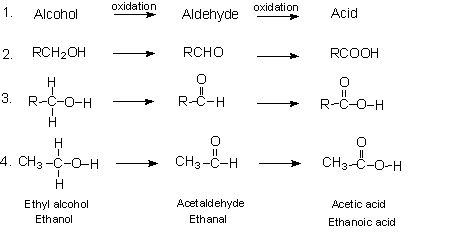
In the following scheme through understanding the basic principles, it is possible to literally answer dozens of questions concerning such conversions.
Note:
- The first equation of the above scheme depicts the relation among the three functional groups.
- The second equation presents the same information using the general formula.
- The third equation presents again the same information using the structural formula.
- The fourth equation is a specific example.
- All of them are inter related, the same information presented in the first equation has been presented in different forms in the rest of them.
- The -CH2OH group is tansformed to -CHO group, the rest of the molecule remains intact. On further oxidation -CHO group becomes -COOH
- The alcohol on oxidation looses two hydrogen atoms to form an aldehyde (note which two hydrogens). A pi bond is created between the C and O atoms, also the sp3 carbon atom becomes sp2 hybridised in the product.
- The reverse also is true, that is, the aldehyde and the acid can be reduced to a primary alcohol. Again note the changes that take place.
- These reactions require some specific oxidising and reducing agents, which will be presented at a later stage.
Copyrights: 2005 www.chemvista.org All Rights Reserved